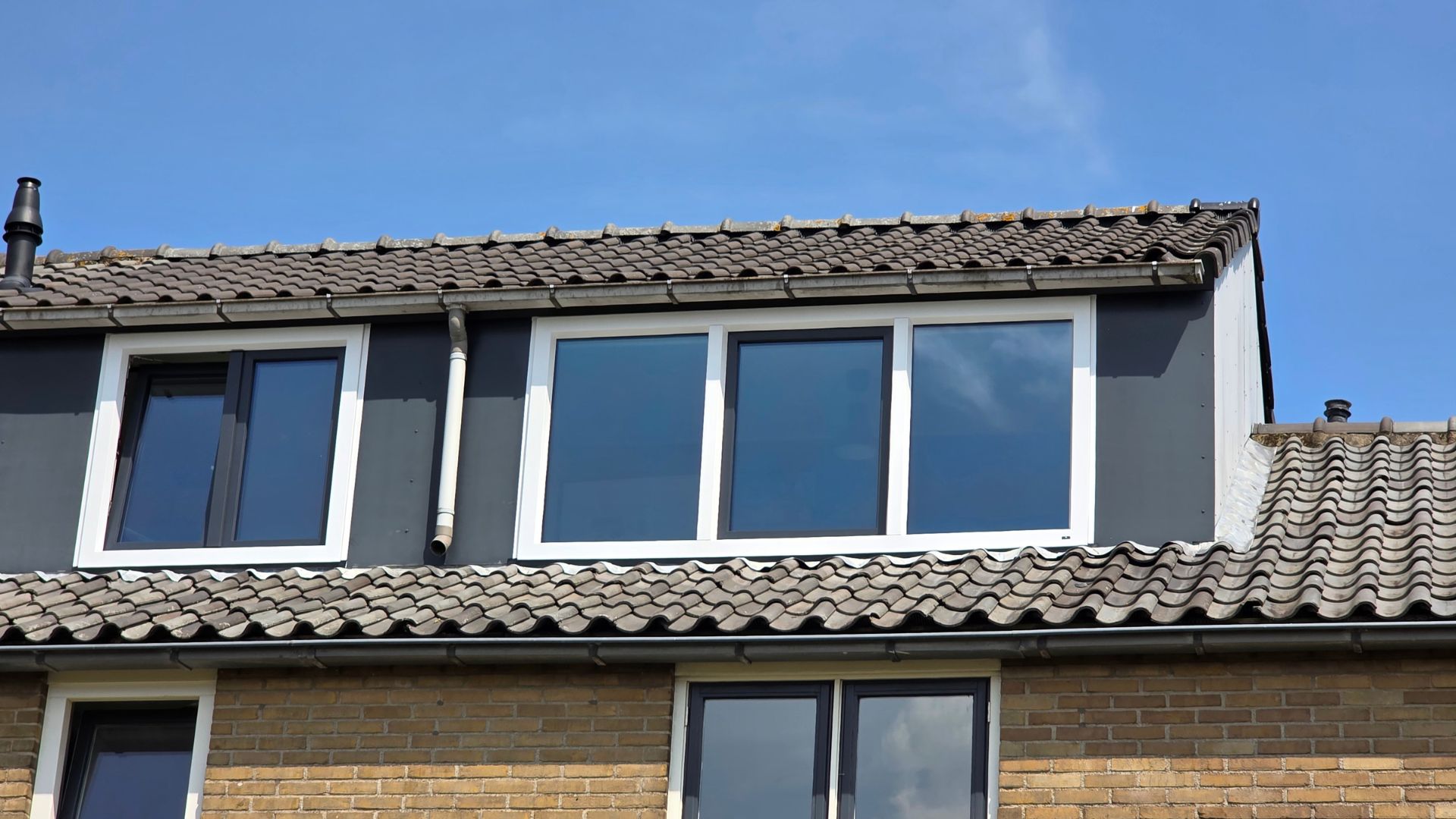
Replacing a window frame starts well before the old frame is removed from the façade. The quality of the installation depends largely on what happens beforehand: assessing the existing situation, measuring accurately, checking junctions and deciding the order of work. Checks and finishing are also needed after fitting.
This process is not always visible to clients. Understanding the steps, however, helps you prepare an enquiry properly and ask focused questions during the work. Below, we explain how window frame replacement generally proceeds. The precise approach depends on the building, the façade construction, the type of window frame and access to the work area.
1. Surveying the existing situation
The first step is to survey the existing window frame and surrounding façade. This involves more than width and height. The condition of the reveals, sill, fixing points and junctions with the façade also matters. In an existing building, dimensions can vary between openings, even when the window frames look identical.
The survey also examines how the old window frame was installed. This helps determine how it can be removed and which parts of the junction will become accessible. Other relevant points include the opening direction of windows, the arrangement of fixed and opening sections, and the desired finish.
Foto’s geven vaak een bruikbare eerste indruk, maar vervangen niet in alle gevallen een opname op locatie. Wie een aanvraag voorbereidt, kan alvast overzichtsfoto’s, detailfoto’s en globale maten verzamelen. Op de pagina over de how ACS Montage works you can read how an installation enquiry is discussed in more detail.
2. Measuring and defining junction details
Accurate measuring is needed to assess how the new window frame will fit into the existing opening. Sufficient room must be allowed for fitting and adjustment without making the perimeter joint unnecessarily wide. The appropriate measuring method depends on the structure and the chosen installation method.
Alongside the opening dimensions, the position within the façade and the junction details are important. A window frame set too far inwards or outwards can affect the junctions with façade cladding, the internal window sill, the external sill or internal finishes. It must also be clear in advance which existing finishes can be retained and where repairs may be needed.
ACS Montage focuses on installing window frames and assessing the practical installation conditions. Manufacturing window frames is outside this scope. Good coordination between the client, supplier and installer ensures that dimensions, installation and junction details are considered together.
3. Preparing the work
The work area is prepared before removal begins. Loose items around the window frame are cleared away, and surfaces that are to remain are protected where necessary. The team also considers how components can be removed safely and how access to the opening can be maintained during the work.
Larger or heavier elements require particular attention to handling. The route to the façade, available working space and any obstacles all need to be considered. For work on commercial premises, maintaining access for staff, visitors or suppliers may also form part of the preparation.
The sequence of work is adapted to the situation. Sometimes one window frame can be completed before work starts on the next. On other projects, a different sequence makes more sense. A general schedule therefore cannot automatically be applied to every building.
4. Carefully removing the old window frame
During removal, the existing window frame is detached from the surrounding structure. The aim is to make room for the new element while limiting unnecessary damage to the façade and interior. The removal method depends on the material, fixings and access.
Once the frame has been removed, the true condition of the opening becomes clear. Concealed junctions, old fixings or local damage are not always fully visible beforehand. The opening is therefore checked before installation proceeds. Loose material and residues that prevent an even fit must be removed.
This check is important. A new window frame should not be installed in an unsuitable or dirty opening without assessment. If the conditions found differ from what was visible beforehand, the appropriate next step must be determined first.
5. Aligning and securing the new window frame
The new window frame is placed in the opening and aligned. Its level, plumb, height, squareness and position relative to the façade are checked. This step requires precision: a small deviation may affect moving parts or show in joints and alignment.
The window frame is then secured using the appropriate installation method. The substrate and type of element determine the fixings required. Checks continue during this work, as securing the frame can affect its alignment. Only once the element is correctly positioned can the surrounding junctions be completed.
The moving parts of windows and doors are checked. They must open and close without unwanted resistance and fit correctly against the frame. Where adjustment is possible and needed, it is carried out before the work is completed.
More information about this type of work is available on the service page window frame installation. For examples of completed installation work, you can also view the projects for more information.
6. Fitting glass, panels and moving parts
Depending on the window frame supplied and the project arrangements, glass, panels or moving parts are fitted during or after alignment. Correct support and positioning are important when fitting glass. Glazing must suit the window frame system and comply with the requirements for the supplied element.
The window frame must not distort during this stage. Its alignment and operation are therefore checked again once the components are in place. A window that worked properly before glazing must still open and close correctly afterwards.
ACS Montage installs glass as part of façade and construction projects. This does not mean that the company manufactures the glass or window frames. The relevant supplier’s information is the basis for product specifications and system-specific requirements.
7. Completing junctions and finishes
Once the frame is secured, the junctions around it are finished. The chosen materials and details depend on the façade, the window frame system and what has been agreed in advance. On the outside, attention is paid to weatherproof junctions and a neat transition to the façade. On the inside, this includes the junctions with reveals, the window sill or existing timber trim.
Finishing is not a way to hide inaccurate fitting. The window frame must first be correctly aligned and work properly; joints, edges and exposed finishes follow. Where aluminium finishing is used, it must also align with the overall design and existing façade details.
Not every repair around the opening is automatically included in window frame installation. Agree in advance which finishes are included in the job and which work will be carried out by another contractor.
8. Inspection and handover
The final inspection covers the installed window frame, the junctions and the operation of windows or doors. Protective materials and installation debris are removed where this forms part of the agreed work. Visible details are checked and any points requiring attention are discussed.
A useful handover is specific. Do the moving parts work as intended? Have the junctions been completed as agreed? Is it clear which maintenance or further finishing remains the responsibility of the client or another contractor? Reviewing these points together makes the condition of the completed installation work clear.
Replacing window frames in Gouda, Capelle, Zoetermeer or Rotterdam
De montageprincipes zijn overal vergelijkbaar, maar iedere woning en ieder bedrijfspand heeft eigen aansluitingen. Voor lokale informatie kunt u terecht op de pagina’s over replacing window frames in Gouda, replacing window frames in Capelle aan den IJssel, replacing window frames in Zoetermeer and replacing window frames in Rotterdam.
ACS Montage works for companies and private clients. Owner Aleks has worked in installation since 2008 and has operated under the name ACS Montage since 2019. Each assessment is specific to the project: first inspect the site conditions and junctions, then determine the appropriate installation approach.
Frequently asked questions
Does each window frame need to be measured individually?
This is often advisable, as openings in existing buildings can vary. The appropriate measuring method depends on the façade construction and how the new window frame will be installed.
Can the existing internal finishes be retained?
That depends on the junction, the removal method and the condition of the finishes. Sometimes part of the finish can be retained; in other cases, local repairs are needed. This must be assessed during the site survey.
Who decides which window frame and glazing will be used?
This is agreed between the client, supplier and contractors involved. ACS Montage carries out installation and can assess the installation conditions, but is not described in this article as a manufacturer of window frames or glass.
Are windows and doors checked for correct operation after installation?
Checking the operation of moving parts is part of inspecting the installed window frame. The specific handover checks must reflect the agreed scope of work and the system used.
Have your window frame project assessed
Would you like to replace your existing window frames? Use Contact een korte omschrijving, foto’s van binnen- en buitenzijde en, indien beschikbaar, informatie over de geleverde of gewenste kozijnen. ACS Montage kan daarmee de montagesituatie en een passende vervolgstap beoordelen.